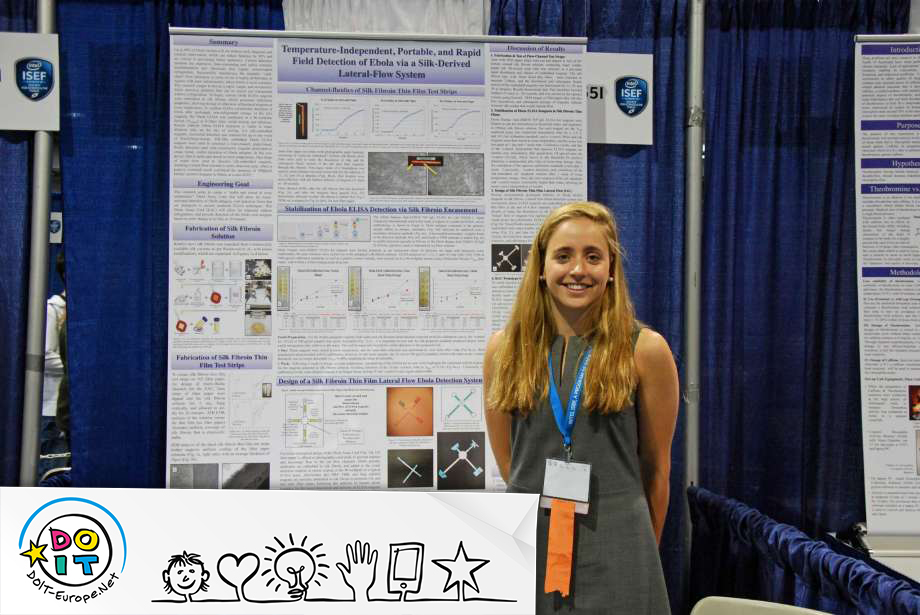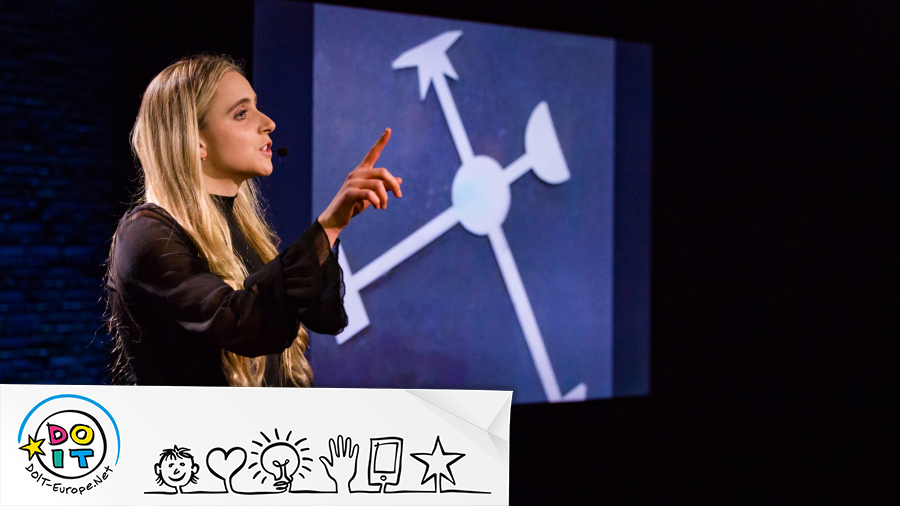
“We measure our happiness in the way we help others.” These are the words, which were told by grandfather of Olivia Hallisey, a young girl from Greenwich, Connecticut, wishing to be a doctor and medical researcher, just like him. A few years ago, she wowed the nation by inventing a super-fast, super-cheap way to detect the fatal disease Ebola, which have already taken lives of thousands of people.
Back in 2014, Ebola had its first huge outbreak in West Africa. Olivia, when she was 16 years old then, remembers: “I was in the class during the time when Ebola was huge in the news and no one really knew what it was — I was drawn to it like everyone else”. She was prompted for researches of current Ebola detections and what could be done more. Olivia found out that current methods require up to 12 hours of diagnose, as well as „temperature controlled supply line“ or „cold chain“, the unbroken refrigeration of reagents from manifacture to use, making realiability highly problematic in remote areas with poor infrastructure. These methods are also expensive and hard to use.
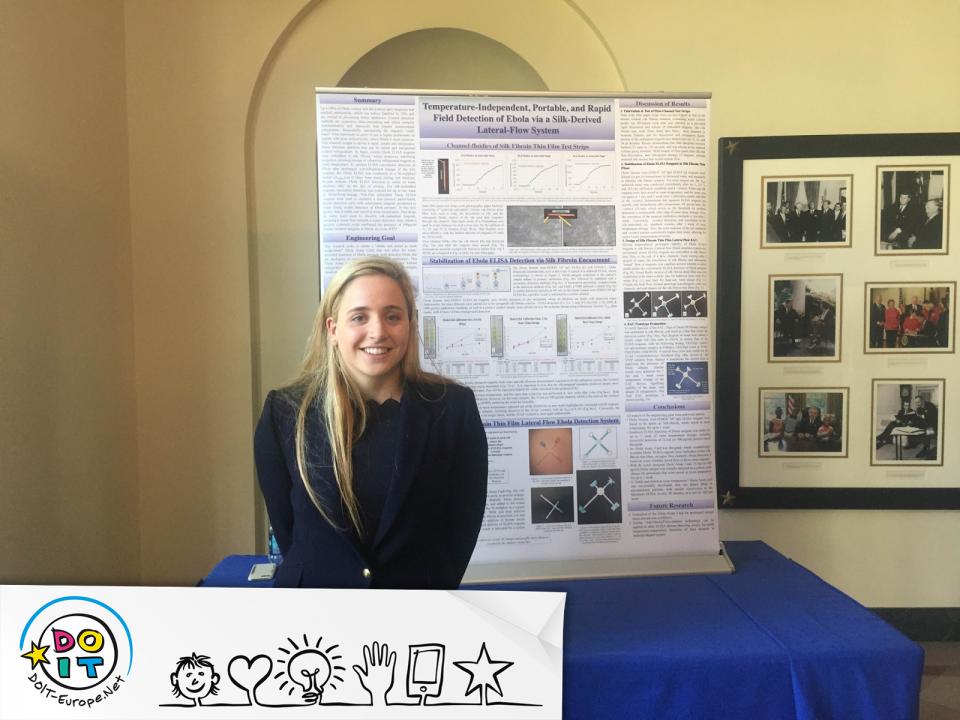
After all this research Olivia was able to create a new test that was temperature independent, inexpensive, sustainable, easy to use, and easy to read. Her device, named as Ebola Assay Card, allows for shipment and storage without refrigeration, provides detection of the Ebola viral antigens based on color change in as little as 30 minutes and costs only $25. And it looks like a card, small, cross-shaped, and simply designed. Although Olivia did not perform human tests, she was able to show that her method could detect the necessary protein. With this invention Olivia entered local state science fair and later on the Google Science Fair in 2015, where she won the grand prize, the biggest award of her lifetime.
Also being a middle school tutor, volunteer and having a passion for swimming, Olivia believes that the excitement, energy and engagement of youth should be always considered as an enormous advantage. She advises to believe in ourselves, don’t get discouraged and don’t think that everything that has to be done is already done. She also encourages young people to “think globally, consider existing solutions and always ask themselves — why not?”